
Bank unions on Friday deferred their two-day nationwide strike beginning Monday after they received positive assurance from both the finance ministry and the IBA on their demands, including a five-day work week and adequate recruitment in all cadres. The strike call for March 24 and 25 was given by United Forum of Bank Unions (UFBU), an umbrella organisation of nine bank employees' association.
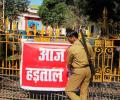
Banking operations at public sector banks across the country were impacted on Tuesday as the United Forum of Bank Unions (UFBU) went on nationwide strike demanding the immediate implementation of a five-day work week.

Bank unions appear to be divided on whether or not to go on a two-day nationwide strike on October 5 and 6.
Bank unions on Monday requested Prime Minister Manmohan Singh to allow resumption of large scale recruitments in public sector banks and disallow outsourcing in the sector as it would affect job opportunities.

A nationwide strike called by central trade unions saw a mixed response across India, impacting various sectors and states differently, with some areas experiencing disruptions while others remained largely unaffected.
Reserve Bank Governor Bimal Jalan on Monday held a meeting the bankmen's unions in order to address the problems faced by the bank employees in issuing clean currency notes to the public.

Two of the three strikes are related to the gig economy, a centrepiece of the new labour Codes.

The United Forum of Bank Unions (UFBU), an umbrella body of nine unions, has given a call for a two-day strike from December 16 to protest against the proposed privatisation of two state-owned lenders. In the Union Budget presented in February, Finance Minister Nirmala Sitharaman had announced the privatisation of two public sector banks (PSBs) as part of its disinvestment plan. The government has already privatised IDBI Bank by selling its majority stake in the lender to LIC in 2019 and merged 14 public sector banks in the past four years.

A section of the public sector banking employees will go on two-day all-India strike from Wednesday to protest against financial sector reforms and outsourcing of jobs.

The unions also made a case for introduction of cluster or hub banking, identifying few branches of each bank in each locality so as to enable bank employees to work on rotation.
Dissatisfied with the wage hike offer made by Indian Banks' Association (IBA), public sector lenders' employee unions on Monday threatened to go on a two-day strike from February 10.
The United Forum of Bank Unions (UFBU), an umbrella body of nine unions, on Tuesday gave a call for a two-day strike from March 15 to protest against the proposed privatisation of two state-owned lenders. In the Union Budget presented last week, Finance Minister Nirmala Sitharaman announced the privatisation of two Public Sector Banks (PSBs) as part of its disinvestment plan. The government has already privatised IDBI Bank by selling its majority stake in the lender to LIC in 2019 and merged 14 public sector banks in the last four years.
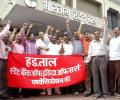
The United Forum of Bank Unions (UFBU) on Thursday said its two-day nationwide strike on March 24 and 25 will be observed as scheduled since discussions with the Indian Banks' Association (IBA) over key demands failed to yield any positive outcome. In a meeting with the IBA, all UFBU constituents raised issues, including recruitment in all cadres and a five-day workweek.
The wage revision of public sector bank employees is due from November 2012.

Maharashtra Navnirman Sena (MNS) president Raj Thackeray has asked his party workers to temporarily halt the agitation demanding the use of Marathi language in banks and other establishments. Thackeray said the agitation has been successful in raising awareness about the issue and that the government should now implement the Reserve Bank of India's (RBI) norms on the use of local languages. He warned that the MNS will take action if the government fails to ensure the law is followed.

During the negotiations held on May 5, IBA made two unacceptable propositions including an offer of 2 per cent hike in the wage bill cost as on March 31, 2017
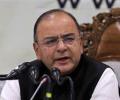
He said the Finance Minister assured the delegation that the Financial Services Secretary would look into the matter and the settlement process would be expedited.

India was among the countries not present in Davos when US President Donald Trump unveiled his "Board of Peace" that seeks to work towards bringing lasting peace to Gaza and possibly resolve global conflicts. India is yet to take a call on it, people familiar with the matter said when asked about Trump's invite to PM Modi.
Bank employees want a five day work week.

Agitators at Tezpur University on Sunday vowed to enforce a shutdown at the institution, which has been witnessing sustained protests since mid-September against alleged irregularities by Vice Chancellor Shambhu Nath Singh, till a formal communication from the Centre regarding the VC's removal is received.

Bank strike continued for day-two on Tuesday, led by nine unions of public sector banks (PSBs) in the country, opposing government's policy to privatise the lenders. Customers will be inconvenienced to get services such as cash withdrawals, deposits, cheque clearances, remittance services. Government transactions related to treasury as well as business transactions will also be impacted. United Forum of Bank Unions (UFBU), an umbrella body of nine unions, had given a strike call for March 15 and 16.
United Forum of Bank Unions is seeking at least a 15-per cent hike, but the Indian Banks' Association has capped the raise at 12.25 per cent.

Amid US-China trade tensions and economic vulnerabilities, India must seize the 'China +1' opportunity, deepen reforms, secure FTAs, and globalise its firms for long-term growth, suggests Ajay Shah.

The bank unions had threatened to go on 4-day strike from February 25.

As many as 8.5 lakh bank employees are set to benefit from the wage hike, which will be effective from November 2017.
Officials said the IBA had three major agendas to discuss, the most important being to persuade the unions to accept the new pension scheme, otherwise known as the contributory pension scheme, for new bank employees. Currently, the bank unions are vehemently opposing it since unions of no other sector has accepted it to date.

Banking services are likely to be affected for the next four days as employees of PSU banks plan to go on a zone-wise relay strike beginning with Southern region from Tuesday, after wage revision talks failed.
Banking services were affected on Friday as employees of public sector banks struck work demanding compassionate appointments, fresh recruitments, one more pension option and ban on outsourcing and merger of public sector banks.

Lakhs of employees of public sector banks continued their strike on the second day on Friday as well to protest against proposed privatisation of banks by the government impacting normal operation across the country. Shutters of branches across many parts of the country on Friday were down following the strike call given by the United Forum of Bank Union (UFBU), an umbrella body of nine bank unions including All India Bank Officers' Confederation (AIBOC), All India Bank Employees Association (AIBEA) and National Organisation of Bank Workers (NOBW). As a result, services such as deposits and withdrawal at branches, cheque clearance and loan approvals remains paralaysed due to the two-day strike ending later in the day.
Employees of public sector banks have called off the strike planned on February 25 and 26
The United Forum of Bank Unions, a body of nine bank unions, has announced a nationwide strike on September 12, after recent talks with the chief labour commissioner over the implementation of a memorandum of understanding failed.
The decision was taken by bank unions at a meeting with IBA representatives, on the directive of chief labour commissioner, in Mumbai. UFBU is the umbrella body of bank unions in the country and consists of members from public, private and foreign banks.

AIBEA is part of United Forum of Bank Unions, the umbrella organisation of employee and officer unions of nine banks, which has given the call for one-day strike on January 7 and four days from January 21 in support of their wage hike demand pending since November 2012.
The nationwide bank strike scheduled on October 5-6 has been called off after Indian Banks Association agreed for fresh negotiations with bank unions on wage revision and other demands.
Accusing the labour ministry of "playing hide and seek" with their demands, the bank unions on Tuesday threatened to go on an indefinite strike.\n\n\n\n

Operations in branches of public sector banks are affected and cheque clearance would be delayed.
The United Forum of Bank Unions consisting of nine bank unions has threatened to go on a one-day strike on August 24 in support of their wage demand.
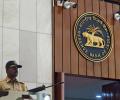
The Reserve Bank of India (RBI) unions have decided to intensify their stir demanding revision of wages, pending since November 2017, and have called for mass casual leave of employees at the central bank on November 30. However, several sources in the RBI told Business Standard that the unions may not have to go on agitation, as the new contours of the wage pact have been almost finalised and could be announced any time. An email sent to the RBI was not answered. The United Forum of Reserve Bank Officers and Employees had deferred its agitation earlier after it was told that RBI Governor Shaktikanta Das was to hold talks with the human resource management department (HRMD).
Bank unions on Thursday called for a nationwide strike on August 24 to protest the 'negative attitude' of the Indian Bank Association over employees' wage revision.
Unions claimed that about 10 lakh staff and officers of public sector banks and some private sector banks are participating in the strike.
 © 2026 Rediff.com - Advertise with us - Disclaimer - Privacy Policy - Sitemap - Feedback - About us - Terms of use - Grievances